Strength and Fitness Start to Wane Around Age 35
After 35 Fitness Declines, but Activity Helps!

Fact Checked
×All the content published in our website is fact checked to validate its accuracy.
Visit our guidelines web page to learn more about our strict processes regarding how we review our content's sources: reliable and reputable journals, media websites, universities, colleges, organizations, and professionals.
Our articles are based on scientific evidence, and the references are included in their footnotes, which are clickable links to sound scientific papers.
First published: 27. Jan.2026
Overview
The Swedish Physical Activity and Fitness (SPAF) cohort that began in 1974, followed 427 individuals born in 1958, and recorded their health, lifestyle, and physical capacity (muscular endurance, aerobic capacity, and muscular power) from the age of 16 to old age (63 years).
The latest findings reported by the Karolinska Institutet, revealed that fitness and strength begin to decline around age 35 and wane with age, with a cumulative decline of 30 to 48%.
However, the positive note is that it is never too late to start moving and exercising, as physical activity slows down the rate of decline.
The study is ongoing, and further results will be published once the participants are tested again during 2026, as they reach the age of 68.
In this Article (Index)
- Physical Capacity Declines With Age
- Physical Capacity Decline is Inevitable
- Physical Activity is the Key to slow down decline
- Details of this Study
- Rate of Decline
- Physical Activity and Better Outcomes
- Closing Comments

Physical Capacity Declines With Age
A recent paper (1) published in December 2025, after analyzing data from a 47-year-long Swedish study, revealed how physical capacity declines with age, starting as early as the age of 35 years.
The cohort comprised 427 individuals, of which 52% are men and 48% women. They were born in 1958, and the study began in 1974. Data was collected as they aged, starting during their teens, at the age of 16, and repeated at ages 27, 34, and 63 (during 2026, as they reach the age of 68, additional information will be gathered for analysis).
Physical Capacity Decline is Inevitable
The decline of physical capacity, as measured by muscular endurance, aerobic capacity, and muscular power, is inevitable; however, physical activity can positively influence this decline and attenuate its negative effects.
The study disclosed that fitness and strength start waning around the age of 35.
Decline continues, at a gradual pace, and speeds up with age.
Physical Ativity is the Key to slow down decline
The encouraging finding is that exercise can help slow down this downhill trend.
Physical activity consistently emerges as the most important factor influencing both absolute physical capacity and the rate of age-related decline. Our longitudinal data are consistent with previous studies showing that regular physical activity can attenuate the decline in physical performance. Individuals who were physically active in their leisure time at age 16 maintained higher aerobic capacity, muscular endurance and muscle power throughout the observation period. This emphasises the importance of early intervention to establish positive exercise habits in adolescence and early adulthood, as these patterns appear to have long-term benefits for physical function. Maria Westerståhl, et al., (2025)(1)
The lead author of the study, Maria Westerståhl, lecturer at the Department of Laboratory Medicine at the Karolinska Insitutet says that "It is never too late to start moving. Our study shows that physical activity can slow the decline in performance, even if it cannot completely stop it. Now we will look for the mechanisms behind why everyone reaches their peak performance at age 35 and why physical activity can slow performance loss but not completely halt it."(2)
Details of this Study
Different studies have shown that staying physically active into old age provides health benefits, including a lower risk of sarcopenia. As people age, there is a natural, progressive loss of muscle mass. This is known as Sarcopenia. It becomes evident around the age of 60 to 70, and its prevalence increases at a rate of approximately 0.5% per year.
This study revealed that the rate of decline can be modified by engaging in physical activity.
It also found that the decline is steeper than reported by other previous studies.
Improvement before the peak performance is reached, the level attained before decline sets in, and the rate of decline are all modifiable by physical activity.
Rate of Decline
Aerobic Capacity and Muscular Endurance
Peaked at ages 26 and 36, respectively, for both men and women. There were no sex differences in the decline rate. Endurance was measured using bench press repetitions.
- Initial Rate of Decline: 0.3% to 0.6% per year.
- Accelerating with age to: 2.0% to 2.5% per year.
- The total decline in relative aerobic capacity from peak capacity age to age 63 was 37% in women and 40% in men.
- The total decline in muscular endurance from the age of peak capacity to age 63 was 32% in women and 35% in men.
Muscle power
This indicator was measured using the "Sargent jump test". Men peaked at 27 and women at 19. The decline rate was the same for both sexes.
- Initial Rate of Decline: 0.2% to 0.5% per year.
- Accelerating with age to: 2.2% per year.
- The total decline in vertical jump from the age of peak capacity to age 63 was 48% in women and 41% in men.
The accumulated decline in physical capacity from peak to the age of 63 ranged from 30% to 48%.
Interestingly, the study found that people put on weight as they age: "BMI increased mainly between the ages of 16 and 50, with a faster increase in men between the ages of 30 and 50."
Even though physical activity has protective effects, this study "Suggest[s] that no one can escape age-related decline in physical capacity."
Physical Activity and Better Outcomes
Those who had a higher level of "leisure-time" physical activity when they were 16 years old, or became active during adulthood, were linked to better outcomes (slower decline with age).
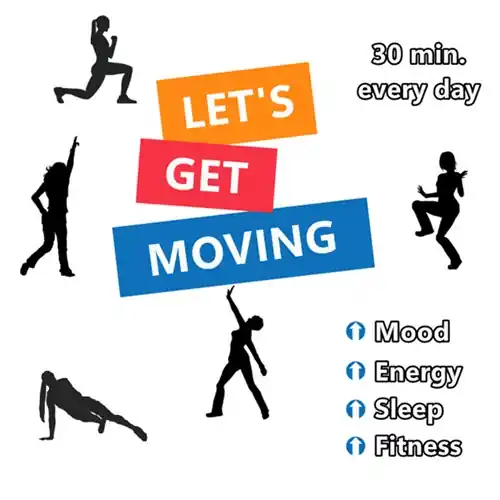
Never too late to get Moving
"Switching from a physically inactive to an active lifestyle also increased physical capacity in all these tests by 6%–7% for aerobic capacity, 11% for the bench press and 4% for the vertical jump."(1)
Closing Comments
The key point is that the decline in physical capacity is inevitable. Aging is a process that begins early, typically around the age of 35. However, by engaging in physical activity, exercising regularly, and keeping moving, one can slow down the rate of decline and ward off the onset of sarcopenia.

References and Further Reading
(1) Maria Westerståhl, Gustav Jörnåker, Eva Jansson, Ulrika Aasa, Michael Ingre, Kaveh Pourhamidi, Brun Ulfhake, Thomas Gustafsson, (2025). Rise and Fall of Physical Capacity in a General Population: A 47‐Year Longitudinal Study. Journal of Cachexia, Sarcopenia and Muscle, 2025; 16 (6) DOI: 10.1002/jcsm.70134
(2) News from Karolinska Institutet, (2025). Long-term study reveals physical ability peaks at age 35. Published: 16-12-2025. Updated: 09-01-2026
About this Article
Strength and Fitness Start to Wane Around Age 35, A. Whittall
©2026 Fit-and-Well.com. First Published: 27.Jan.2026. Update scheduled for 27.Jan.2029. https://www.fit-and-well.com/fitness/strength-and-fitness-wane-after-age-35.html
Tags: exercise, fitness, sarcopenia, aging