Hibiscus Fact Sheet
The benefits of Hibiscus

Fact Checked
×All the content published in our website is fact checked to validate its accuracy.
Visit our guidelines web page to learn more about our strict processes regarding how we review our content's sources: reliable and reputable journals, media websites, universities, colleges, organizations, and professionals.
Our articles are based on scientific evidence, and the references are included in their footnotes, which are clickable links to sound scientific papers.
First published: 13.Jan.2026
Overview
Research has shown that hibiscus (Hibiscus sabdariffa L.) has antioxidant and anti-inflammatory properties that lower blood pressure, control cholesterol, metabolic syndrome, decrease blood sugar, promote weight loss, exert neuroprotective effects improving cognitive function, and provide anti-Alzheimer's benefits.
Hibiscus is used in teas, desserts, jams, sauces, syrups, and cold beverages.
Traditional medicine has applied decoctions of hibiscus as an antimicrobial, antiparasitic, diuretic, laxative, antianemic, analgesic, and cardioprotective agent.(1)
This article reviews the scientific evidence backing these health claims.
In this Article (Index)
- Hibiscus
- Hibiscus Tea
- Hibiscus: Nutritional Values
- Phytochemicals in Hibiscus
- Health Benefits
- Improves Physical Fitness
- Anti-inflammatory Activity
- Alzheimer's Disease Benefits
- Cognitive Function Promoter
- Lowers Blood Pressure and Cholesterol Levels
- Anti-Diabetic Properties
- Weight Loss
- Closing Comments
Hibiscus
Hibiscus, also known as Red rosewood, or Roselle (Hibiscus sabdariffa L.), belongs to the mallow, or Malvaceae family. The plant is native to Western Africa, and it was dispersed to the West Indies with the slave trade in the 1600s. Nowadays, it is cultivated across the world's tropical regions.
In America, its name is Florida Cranberry or Jamaica sorrel; in Latin America, it is called Flor de Jamaica (Jamaica Flower).
A well-known member of the Hibiscus family is the Hibiscus × rosa-sinensis, better known as Chinese hibiscus, China rose, or Hawaiian hibiscus.
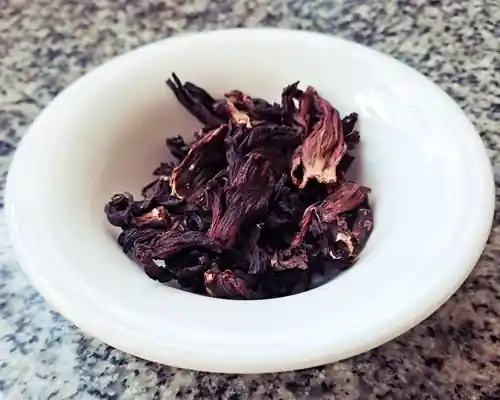
It is an annual bush-like plant that can reach a height of 6 or 7 feet (2 m). It is cultivated for its flowers, namely the dark-red calyces that surround the fruit. Which are dried.
It is also consumed as a fresh fruit. Hibiscus petals (calyces) and also the plant's leaves are used in different types of food in India and Southeast Asia.
Hibiscus Tea
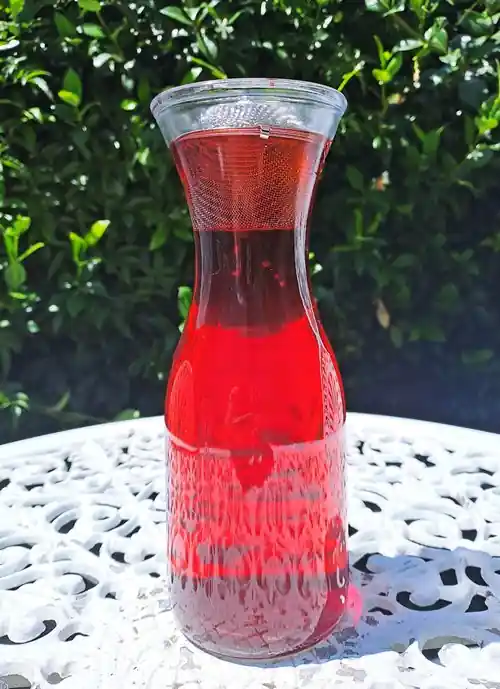
The basic tea originated in the West Indies. Hibiscus tea is made by boiling fresh, frozen, or dried roselle fruits or calyces of the hibiscus flower in water. Ginger, cloves, and bay leaves are also added to the boiling infusion. This caffeine-free herbal drink is served cold or chilled. This beverage is known in the U.S. as sorrel or jamaica and in the West Indies as bisap. In Latin America, its name is Agua Fresca or Agua de Jamaica. It is taken straight, mixed with fruit juice, with or without sugar.
Best Brewing: Tips
As we will see in the following sections, hibiscus contains many bioactive compounds. These are released as the roselle infusion brews. A study (2) evaluated the optimal conditions for hibiscus tea-making: dried hibiscus roselles should be brewed for 30 minutes using hot, but not boiling, water at 90°deg;C (194°F) using a water to hibiscus roselles ratio of 1:10, this will "produce Roselle tea with the highest content of beneficial ingredients."
Health Benefits
Let's explore the health benefits of Hibiscus.
- Improves Physical Fitness
- Anti-inflammatory Activity
- Alzheimer's Disease Benefits
- Cognitive Function Promoter
- Lowers Blood Pressure and Cholesterol Levels
- Anti-Diabetic Properties
- Weight Loss
Improves Physical Fitness
A study conducted in 2024(4) followed 30 subjects over one month, with weekly evaluation of their physical fitness. Each participant consumed 200 ml (7 oz) of roselle calyces tea every morning and evening. The evaluation included strength, balance, right and left hand grip, vertical jump and VO2max (maximum oxygen consumption). The study confirmed that hibiscus tea improved these parameters.
"The results showed significant improvements in strength (from 24.9 to 27.3 kg), balance (from 23.3 to 42.2 sec), right (from 31.8 to 35.1 kg) and left hand grip (from 29.8 to 31.6 kg), vertical jump (from 38.6 to 41.1 m+sec) and VO2max (from 31.1 to 34.3 ml+kg+min). This demonstrated that roselle significantly improved six parameters of physical fitness and may be used as a supplement to improve physical fitness without severe side effects."
Anti-inflammatory Activity
A statistical review of studies by Nogueira de Cruz, et al., (2025) (5) investigted the anti-inflammatory properties of hibiscus and its bioactive compounds.
The different phytochemicals found in hibiscus combine and exert multiple interactions with different targets within the body to produce anti-inflammatory effects. The polyphenols and flavonoids play an important role in mediating inflammation. The study concluded that "analysis of the data revealed benefits in the use of the plant in several pathologies, including degenerative diseases, sepsis, neoplasms, intestinal dysfunctions, and atherosclerosis. Above all, the robust evidence of anti-inflammatory properties, widely investigated in the therapeutic context, stands out."
Alzheimer's Disease Benefits
Hibiscus may act as a neuroprotective agent to prevent Alzheimer's disease in mice (El-Shiekh et al. 2020). (6)
Considering that hibiscus has antioxidant, anti-inflammatory, antimicrobial properties, and that some studies suggest it has sedative, antioxidant and neuroprotective activities, this study focused on its neuroprotective effects in mice. It found that anthocyanin-enriched extract from hibiscus, with antioxidant and acetylcholinesterase inhibition activity showed promising results: "Hibiscus prevented memory impairment, and this could be attributed to the amelioration of STZ-induced neuroinflammation and amyloidogenesis. Consequently, Hibiscus represents a promising safe agent that can be repurposed for AD through exerting anti-inflammatory, anti-acetylcholinesterase, antioxidant, and anti-amyloidogenic activities."
Acetylcholine (ACh) is a neurotransmitter that which regulates signals between the brain and muscles and also modulates mood, arousal and memoru. The effect of hibiscus by inhibiting aetylcholinesterase, prevents the action of an enzyme (acetylcholinesterase) from breaking down ACh, maintaining its role in cognitive funcitons.
Anti-amyloidogenic activities refer to preventing the formaiton of amyloids, clumps of protein that are associated with Alzheimer's disease.
Cognitive Function Promoter
A recent randomized study conducted in 2025 (7) evaluated the effects of hibiscus in a group of 20 obese subjects who either drank a hibiscus beverage or a placebo together with a high carbohydrate breakfast. The blood sugar levels and cognitive fitness were evaluated following a w-hour wait.
Those who consumed hibiscus showed a lower glucose spike compared to the placebo group. They also had a higher word recall score on a visual verbal learning test, as well as better "retroactive interference" (a test that shows that newly learned information interfered less with the recall of previously learned information). Cognitive tests also showed some improvements in executive function and pattern separation tests.
hibiscus consumption moderately affects aspects of memory and executive function, coupled with beneficial effects on postprandial glucose response. Ellis, L., Aragón-Rojas, S., Dye, L., & Boesch, C., (2025)(7)
Closing Comments
These promising findings suggest that Hibiscus provides health benefits.
All these studies concluded that further research was needed to confirm their findings and suggested using larger sample sizes for this purpose. They also cautioned that studies would be necessary to determine the adequate dosing, and effect of longer-term consumption of hibiscus on different health outcomes.
Take-home point
Drinking Hibiscus tea could provide some interesting health benefits, such as lower blood sugar and cholesterol levels, reduced blood pressure, improved physical fitness, and cognitive health.

References and Further Reading
(1) Montalvo-González E, et al., (2022). Physiological Effects and Human Health Benefits of Hibiscus sabdariffa: A Review of Clinical Trials.. Pharmaceuticals (Basel). 2022 Apr 12;15(4):464. doi: 10.3390/ph15040464. PMID: 35455462; PMCID: PMC9033014.
(2) Nguyen, Q. V., and Chuyen, H. V. (2020). Processing of Herbal Tea from Roselle (Hibiscus sabdariffa L.): Effects of Drying Temperature and Brewing Conditions on Total Soluble Solid, Phenolic Content, Antioxidant Capacity and Sensory Quality. Beverages, 6(1), 2. https://doi.org/10.3390/beverages6010002
(3) Jamrozik D, Borymska W, Kaczmarczyk-Zebrowska I., (2022). Hibiscus sabdariffa in Diabetes Prevention and Treatment-Does It Work? An Evidence-Based Review.. Foods. 2022 Jul 19;11(14):2134. doi: 10.3390/foods11142134. PMID: 35885378; PMCID: PMC9319339
(4) Lubis L., Dewi G.T., Supriyan A.N.D, Aprinaldi A., Purba A., Diantini A., (2024). Roselle (Hibiscus sabdariffa L.) calyces tea improves physical fitness of healthy adults. Biomed Rep. 2024 Jan 29;20(3):49. doi: 10.3892/br.2024.1737. PMID: 38357241; PMCID: PMC10865176.
(5) Nogueira da Cruz, A. C. S., M. J. T. A. Madruga Mesquita, G. k. R. Dantas, et al. , (2025). Applicability of Hibiscus sabdariffa L. Extract With Anti-Inflammatory Potential in Human Health: A Review. Food Science & Nutrition 13, no. 9: e70938. https://doi.org/10.1002/fsn3.70938.
(6) El-Shiekh RA, Ashour RM, Abd El-Haleim EA, Ahmed KA, Abdel-Sattar E., (2020). Hibiscus sabdariffa L.: A potent natural neuroprotective agent for the prevention of streptozotocin-induced Alzheimer's disease in mice. Biomed Pharmacother. 2020 Aug;128:110303. doi: 10.1016/j.biopha.2020.110303. Epub 2020 May 29. PMID: 32480228.
(7) Ellis, L., Aragón-Rojas, S., Dye, L., & Boesch, C., (2025). Acute effects of Hibiscus sabdariffa on blood pressure and cognitive function. Nutritional Neuroscience, 28(9), 1093–1103. https://doi.org/10.1080/1028415X.2025.2462944
(8) Lucy R Ellis, Sadia Zulfiqar, Mel Holmes, Lisa Marshall, Louise Dye, Christine Boesch, (2022). A systematic review and meta-analysis of the effects of Hibiscus sabdariffa on blood pressure and cardiometabolic markers. Nutrition Reviews, Volume 80, Issue 6, June 2022, Pages 1723–1737, https://doi.org/10.1093/nutrit/nuab104
(9) García-Muñoz, AM. (2023). Effect of the Combination of Hibiscus sabdariffa in Combination with Other Plant Extracts in the Prevention of Metabolic Syndrome: A Systematic Review and Meta-Analysis. Foods. 2023; 12(11):2269. https://doi.org/10.3390/foods12112269
(10) Dilokthornsakul P., et al. (2024). Clinical effects of Hibiscus sabdariffa Linn. on obesity treatment: A systematic review and meta-analysis of randomized controlled trials. Complement Ther Med. 2024 Sep;84:103063. doi: 10.1016/j.ctim.2024.103063. Epub 2024 Jun 13. PMID: 38878905.
About this Article
Hibiscus Fact Sheet, A. Whittall
©2026 Fit-and-Well.com. First Published: 13.Jan.2026. Update scheduled for 13.Jan.2029. https://www.fit-and-well.com/fitness/hibiscus-factsheet.html
Tags: blood pressure, diabetes, cholesterol, inflammation, phytochemicals, cognition, Alzheimer's