Fit and Well Logo

Our Policies About Us Contact Us

Home > Health > Vitamins & Supplements > Creatine Factsheet

Creatine Factsheet

All you need to know about creatine

By | Updated .

checked symbolFact Checked

Fact Checked

×

All the content published in our website is fact checked to validate its accuracy.
Visit our guidelines web page to learn more about our strict processes regarding how we review our content's sources: reliable and reputable journals, media websites, universities, colleges, organizations, and professionals.
Our articles are based on scientific evidence, and the references are included in their footnotes, which are clickable links to sound scientific papers.

First published: 16 Jan.2026

Overview

Creatine is a popular supplement, promoted as a booster of muscle strength, resistance, and mass. It is used by athletes and those seeking to enhance their physical performance. We obtain our daily creatine requirements through our diet (mainly from beef, poultry, and fish), but some groups, like women, vegans, vegetarians, and the elderly could benefit from creatine supplementation.
This article will review the facts, uses, health benefits, and adverse side effects of creatine.

In this Article (Index)

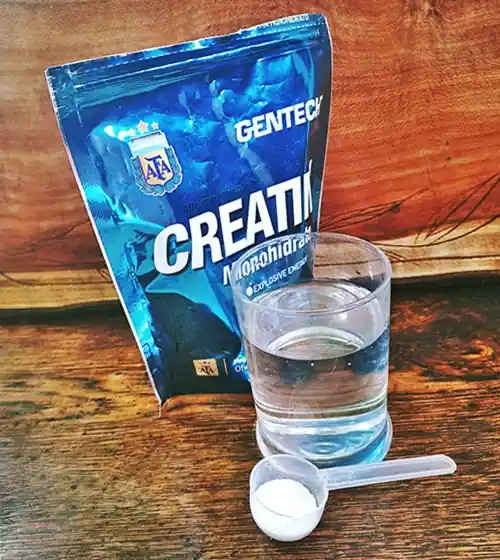
glass, spoon, creatine and packet
Creatine supplement. A. Whittall

What is Creatine

Creatine or methylguanidin-acetic acid is a chemical compound formed inside the body, in the liver, pancreas, and kidneys, by combining three amino acids, arginine, glycine, and methionine, this generates around 1 g/day of endogenous creatine (2). This is the "endogenous" (internally generated) creatine.

Dietary Sources of Creatine

Food provides "exogenous" creatine (external origin).

Creatine is found in certain foods, like beef, pork, fish, and poultry. Eggs and milk contain trace amounts.

For example, meat contains about 0.7 g of creatine / 6 oz. (180 g) serving. A normal omnivorous diet provides 1–2 g/day of creatine.(2)

What is the function of creatine?

The muscle converts creatine into phosphocreatine (PCr). It is used to produce adenosine triphosphate (ATP), the most important molecule used by cells to store and transfer energy. The energy obtained from food is stored as ATP, and the cells break ATP down to generate energy when they need it.

Creatine is stored in tissue with high energy demands: 95% is found in skeletal muscle, and the remaining 5% in the brain, liver, kidney, and testes.(3)

Some cells like neurons, cardiomyocites and hepatocytes also contain significant levels of creatine.(2)

For these reasons, it is widely used as a supplement by athletes and people who exercise to improve muscle mass, performance, and recovery.

Creatine spontaneously decomposes becoming creatinine, which is excreted through urine. Roughly 1.7% of the total body pool of creatine is lost every day.(3)

Recommended Doses of Creatine

There is no formal recommended dose for creatine. However, the European Food Safety Authority (EFSA) concluded in 2004 concluded that the consumption of creatine monohydrate supplement, of high purity (99.5%), in doses not exceeding 3 g/day is unlikely to pose any risk in heathy adults.

A similar conclusion was published by the Norwegian Scientific Committee for Food Safety (VKM) in 2016, "concluding that: In adults (> 18 years) a daily dose of 3.0 g/day creatine in food supplements is unlikely to cause adverse health effects. Doses of 5.0, 10.0 and 24.0 g/day creatine in food supplements may represent a risk of adverse health effects."

Private organizations like the International Society of Sports Nutrition have stated that "There is no compelling scientific evidence that the short- or long-term use of creatine monohydrate (up to 30 g/day for 5 years) has any detrimental effects on otherwise healthy individuals or among clinical populations who may benefit from creatine supplementation... Clinical populations have been supplemented with high levels of creatine monohydrate (0.3 – 0.8 g/kg/day equivalent to 21–56 g/day for a 70 kg individual) for years with no clinically significant or serious adverse events."

FDA and GRAS status

AlzChem Trostberg GmbH, a German manufacturer of creatine monohydrate sent a formal, voluntary application requesting GRAS (Generally Regarded As Safe) status to the American Food and Drug Administration (FDA), it was not questioned, but no statement was issued confirming that creatine monohydrate is GRAS under 21 CFR 170.35.

Different stuies have reported doses of creatine od 3-5 g/day or 0.1 g/kg of body mass per day.(1) and a lower maintenance dose of 0.03 g/kg per day.(2)

FAQ regarding Creatine

Below are some Frequently Asked Questions related to creatine supplementation.

Does creatine cause water retention?

Research shows that during the initial days of creatine supplementation, the body water increases and so does the extracellular body water content.

Creatine is an osmotically active compound. Osmosis is the process by which water moves in and out of cells, crossing semipermeable membranes (like cell walls). Many compounds, like sugar, salt, alcohol, and creatine, are osmotically active and can't cross membranes, so water does so to balance osmotic pressure, causing water retention.

Supplementation over longer periods may not alter total body water relative to muscle mass, and may not lead to water retention.(1)

Water retention during the initial stages of creatine supplementation are caued by the compound's affinity with water that may cause an increase in the water content of the intracellular medium. This additional water is a plus for athletes as it promotes cellular hydration and helps muscle performance and recovery. For people who are managing their weight, this temporary water retention may be seen as a disadvantage.(2)

Does Creatine damage the kidneys?

Creatine and PCr are broken down into a substance called creatinine, which is moved into the blood and excreted by the kidneys. It is eliminated in urine. If the kidney function is compromised, as in people with chronic kidney disease, the kidneys can't filter the creatinine, and it builds up in the blood. Blood creatinine levels serve as a marker of kidney and renal health.

Creatine supplementation can increase creatinine levels in blood and urine, but this does not reflect ailing or overloaded kidneys, especially in healthy individuals.(2)

Before taking any medication, dietary supplement, or "natural", herbal remedies, you should speak with your healthcare provider. This applies to creatine.

Decades of research "indicates that creatine supplementation, when ingested at recommended dosages, does not result in kidney damage and/or renal dysfunction in healthy individuals."(1)

However, further research is needed to evaluate the safety and efficacy of creatine supplementation in people suffering from chronic kidney disease or pre-existing kidney conditions, or other underlying health concerns.

Further down, we discuss Kidney Health in detail.

Cancer and Creatine

Research published in 2022 (4) reports that although creatine inhibits growth of subcutaneous tumor and have been considered cancer suppressive substances, that also enhance the antitumor activity of certain immune cells, recent studies "have demonstrated the promoting effect of creatine on cancer metastasis..."

Mouse models show that "creatine promoted invasion and metastasis of pancreatic cancer, colorectal cancer, and breast cancer."

The authors consider these findings a "call to caution when considering creatine supplementation to clinically treat cancer patients."

Another study published in 2024 (5) notes that creatine could provide "energy for cancer migration and metabolism, consuming supplementary creatine for body health should be viewed more conservatively."

A 2022 study using mice models (6) echoed these concerns, as it noticed that mice receiving exogenous creatine (supplementation) displayed tumor growth, that drives prostate cancer progression, and concluded that this "highlights the need to assess creatine supplementation in patients with prostate cancer with caution."

Different Forms of Creatine

Creatine is a supplement that comes in different forms, which are said to cover specific needs. The most popular presentations are the following:(2)

Creatine Monohydrate

As its name states, it is a molecule of creatine with a molecule of water linked by a hydrogen bond. It is very stable and makes the molecule more soluble.

Creatine monohydrate powder is the most studied and commonly used form of creatine. It is absorbed easily and increases blood creatine levels for 3 to 4 hours after ingetion (at doses of 3-5 g/day) which makes it easy for tissue to absorb it. Roughly 99% of orally ingested creatine monohydrate is either absorbed into the body tissue or excreted in the urine.
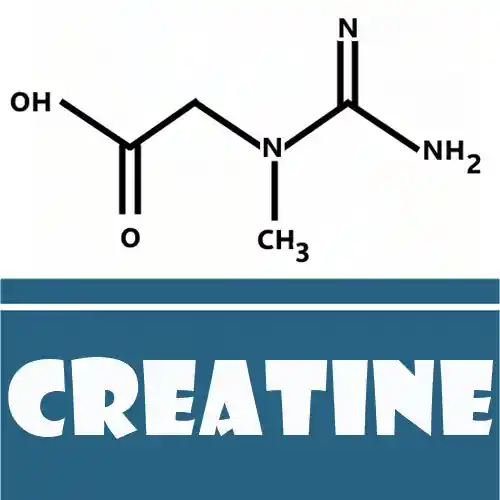
molecular formula
Creatine, molecular formula. A. Whittall

Research suggests that combining regular creatine monohydrate supplementation with a high intake of carbohydrates (100 g - 3.5 oz) increases the total levels of creatine in muscle tissue compared to creatine taken alone. However, this could cause some mild gastrointestinal issues like bloating.

There are other forms of creatine on the market, and they are said to avoid some alleged side effects of creatine monohydrate. Creatine salts, creatine complexed with other nutrients, creatine dipeptides are also available.

The original source of the creatine monohydrate is important as some Chinese sources contain impurities, including heavy metals.(1)

Creatine Ethyl Ester

Due to its ethanol content, the use of creatine ethyl ester is not recommended for pregnant and lactating women, children and adolescents, and individuals with hepatic or renal dysfunction.

Creatine Gluconate

This is creatine bound to a sugar molecule, which is believed to improve its uptake and bioavailability inside the muscle cells.

Creatine Citrate

In this case, the creatine is bonded with citric acid. This makes it more water-soluble than in its monohydrate presentation.

Creatine Magnesium Chelate

This presentation bonds creatine to magnesium forming a salt. It is said to provide better stability and uptake (bioavaliability). Magnesium also plays a role in ATP production.

Creatine in Women and Vegans. Deficit

Some population studies using data from the National Health and Nutrition Examination Survey found that there is a possible creatine shortage from dietary sources in the American adult population. The average daily intake of creatine from food is 0.54 g/day(3)

The reason seems to be the low consumption of meat (Americans have reduced their intake of red meat, the main dietary source of creatine), and a rise in people consuming a vegan or vegetarian diet.

Health Risks from Low Creatine Intake

Among American adults, those in the lowest quartile (the lowest quarter or 25% of a group that has been divided into four) of creatine intake (0 to 0.26 g/d) had a prevalence of depression that was 42% higher, compared to those in the highest quartile of consumption (0.7 to 3.16 g/d).

Vegans

Due to their plant-based diet, lacking the protein density and natural creatine found in beef, pork, mutton, fish, and poultry, creatine levels and PCr concentration are lower in the muscles of vegans and vegetarians. Creatine supplementation could improve muscle creatine stores in this population.

Women

Women, compared to men, also have lower baseline intramuscular creatine levels.

In the next section, we will explore the impact of creatine in the older population.

Creatine and Older Adults

Aging people suffering from sarcopenia and neurodegenerative diseases could benefit from creatine supplementation, which can enhance physical performance, cognitive function, and overall health, improving energy metabolism and supporting recovery from physical and neurological challenges.(2)

The use of creatine could provide benefits in older adults by reducing the effects of age-related sarcopenia.

Sarcopenia (Aging muscles)

As people age, there is a natural, progressive loss of muscle mass. This is known as Sarcopenia.

The process starts around the age of 30, with a decline of 3 to 8% per decade. and accelerates around 60.

Sarcopenia is reflected in lower muscle mass, less muscle strength, fatigue, and loss of functionality. It leads to frailty, balance loss, falls, fractures, and physical disability.

This inevitable decline can be slowed by strength training (resistance training) at least two to three times a week, and an adequate intake of protein to maintain muscle mass. Greater muscle strength lowers the risk of falls, fractures, and frailty.

Creatine and Sarcopenia

Research has shown that creatine supplementation in combination with resistance training can help reduce the effects of sarcopenia.

Creatine supplementation in doses equal or greater than 5 g/day, combined with resistance training improves muscle strength. Doses equal or greater than 3 g/day increase "whole-body lean mass by ~1.2 kg more than resistance training alone in healthy, non-frail older adults. Greater lean mass is associated with improved cardiovascular health and lower overall mortality in older adults" (11)

However, some suggest show that "creatine supplementation without exercise may be ineffective to prevent sarcopenia"(1)

Bone Health

Creatine supplementation combined with resistance training increased bone mineral content in the arms and reduced bone loss (resorption) in comparison to a placebo.

From a clinical and healthy aging perspective, it is recommended that creatine supplementation be combined with resistance training to produce the greatest adaptations in older adults... In summary, there is a growing body of evidence showing that creatine supplementation, particularly when combined with exercise, provides musculoskeletal and performance benefits in older adults. Antonio J. et al., (2021) (1)

Overall Older Adult Health

Another study (3) found that low dietary intake of creatine (below 1 g per day) in men and women aged 65 years or more, had a risk of angina pectoris (chest pain caused by lack of oxygen and blood in the heart) 2.62 times higher and 2.59 times higher risk of liver illness compared to similar aged people who consumed more than 1 g of creatine per day.

It also found that an increase in 0.1 g/d of dietary creatine intake improved height between 6 and 3 mm (~1/4 and 1/8 of an inch).

Rheumatic conditions

Several studies have shown that creatine supplementation can enhance the effects of resistance training in older women with knee osteoarthritis, it improved physical function, stifneess and lower-limb lean mass much more than the placebo group. Similar outcomes were noticed in studies involving people with fibromyalgia and rehumatic arthritis (11)

Cognitive Function

The brain has a specific form of creatine kinase which suggests that creatine has an important role in energizing the brain. Creatine kinase is an enzyme, a substance that is accelerates chemical reactions, and in this case helps transform ADP and creatine phosphate into ATP and creatinine.

Studies have found that creatine supplementation can provide cognitive benefits, especially in vegetarians, who have lower levels of creatine. These improvements include attention, memory, and lower mental fatigue.(2)

Machado et al.,(2022)(12) studied older women who had a high dietary intake of creatine (over 1 g per day, equivalent to 200 to 250 g of red meat or fish) and found that they had a better performance in cognitive tasks requiring attention, compared to women who ate less than 1 g per day of creatine from their diet.

Another study Xu, Bi, Zhang (2024)(13) conducted a meta-analysis of randomized trials published between 1993 and 2024 investigating the effects of creatine supplementation on cognitive function. Their study consisted of 16 trials involving 492 participants. They found that:

  • "Creatine supplementation showed significant positive effects on memory and attention time, as well as significantly improving processing speed time."
  • "However, no significant improvements were found on overall cognitive function or executive function."
  • "Creatine supplementation was more beneficial in individuals with diseases, those aged 18-60 years, and females."
  • "Conclusion: Current evidence suggests that creatine monohydrate supplementation may confer beneficial effects on cognitive function in adults, particularly in the domains of memory, attention time, and information processing speed."

Evidence against cognitive improvement

In 2024, The UK Nutrition and Health Claims Committee (UKNHCC) (14) analyzed cognitive function improvement claims and concluded that there was no cause-effect relationship "established between the consumption of ≤3g per day creatine and improved cognitive function."

The European Food Safety Agency (EFSA) also reached the same conclusion in 2024 https://efsa.onlinelibrary.wiley.com/doi/10.2903/j.efsa.2024.9100 (15)

Another long-term study "found no evidence of improvements in cognitive function following creatine supplementation of either 10 g/day or 20 g/day compared to placebo for 6 weeks." (2)

Take-home point

Current evidence shows that creatine supplements provide limited cognitive improvement effects.

Adverse Effects of Creatine Supplementation

The main concerns regarding creatine supplementation are impaired kidney function, dehydration, body weight gain, gastrointestinal issues, and a higher risk of cancer.

Different studies have shown that creatine supplementation is generally well tolerated and is not associated with clinically significant side effects. A study conducted in 2025 (7) investigated the side effects reported from 685 human clinical trials on creatine supplementation, and reports on adverse effects.

The average dose was around 12.5 g/day for an average of 64.7 days. Those who received a placebo reported side effects in 4.21% of the studies, while those receiving creatinine showed adverse effects in 4.60% on the total number of participants. The main side effects were gastrointestinal issues (4.05% vs. 5.51% for placebo and creatine, respectively), muscle cramps or pain (0.07% and 0.52% for placebo and creatine).

Results demonstrate that Cr supplementation does not increase the prevalence or frequency of side effects when compared to participants ingesting PLA. Therefore, claims that Cr supplementation increases the risk of side effects are unfounded. Kreider, Gonzalez, Hines & Bonila, (2025)(7)

Another 2025 study(9) found that muscle cramps during excercise were unfounded, as were those suggesting that creatine can lead to dehydration. It also noted that gastrointestinal distress was reported "in some individuals, particularly at high doses, but such effects are dose-dependent and not universally experienced."

Kidney health

A systematic meta-analysis of studies looked into the side effects of creatine involving renal function. It found that " The results of the meta-analysis suggest that creatine supplementation did not significantly alter serum creatinine levels... and did not alter plasma urea values... The findings indicate that creatine supplementation does not induce renal damage in the studied amounts and durations." (8). However, a meta-analysis by Longobardi, Solis, Roschel and Gualano (2025)(9) while confirming that there are no adverse effects involving kidney health in healthy individuals, points out that "caution is advised for those with pre-existing kidney conditions and pregnant women, as evidence is lacking for these populations."

Creatine supplementation inhibits the body's endogenous production of creatine. However, once supplementation ceases, body output returns to normal levels.(10)

Creatine use in older adults should be discussed with a healthcare provider. Further studies are needed to evaluate doses, concomitant medications, the effects of co-morbid conditions such as kidney and liver disease, etc.

References and Further Reading

(1) Antonio J, Candow DG, Forbes SC, Gualano B, Jagim AR, Kreider RB, Rawson ES, Smith-Ryan AE, VanDusseldorp TA, Willoughby DS, Ziegenfuss TN., (2021). Common questions and misconceptions about creatine supplementation: what does the scientific evidence really show?. J Int Soc Sports Nutr. 2021 Feb 8;18(1):13. doi: 10.1186/s12970-021-00412-w. PMID: 33557850; PMCID: PMC7871530.

(2) Gutiérrez-Hellín J, et al., (2024). Creatine Supplementation Beyond Athletics: Benefits of Different Types of Creatine for Women, Vegans, and Clinical Populations-A Narrative Review. Nutrients. 2024 Dec 29;17(1):95. doi: 10.3390/nu17010095. PMID: 39796530; PMCID: PMC11723027.

(3) Sergej M. Ostojic, (2021). Creatine as a food supplement for the general population. Journal of Functional Foods, Vol 83, Aug 2021, 104568, https://doi.org/10.1016/j.jff.2021.104568

(4) Zhang, Liwen et al. , (2020). The two sides of creatine in cancer . Trends in Cell Biology, Vol 32, Issue 5, 380 - 390. https://doi.org/10.1016/j.tcb.2021.11.004

(5) Geng Y, DeLay SL, Chen X, Miska J., (2024). It Is Not Just About Storing Energy: The Multifaceted Role of Creatine Metabolism on Cancer Biology and Immunology.. International Journal of Molecular Sciences. 2024; 25(24):13273. https://doi.org/10.3390/ijms252413273

(6) Rachana Patel, et al. (2022). Cyclocreatine Suppresses Creatine Metabolism and Impairs Prostate Cancer Progression. Cancer Res 15 July 2022; 82 (14): 2565–2575. https://doi.org/10.1158/0008-5472.CAN-21-1301

(7) Kreider, R. B., Gonzalez, D. E., Hines, K., Gil, A., & Bonilla, D. A., (2025). Safety of creatine supplementation: analysis of the prevalence of reported side effects in clinical trials and adverse event report. Journal of the International Society of Sports Nutrition, 22(sup1). https://doi.org/10.1080/15502783.2025.2488937

(8) Alexandre de Souza e Silva et al., (2019). Effects of Creatine Supplementation on Renal Function: A Systematic Review and Meta-Analysis. Journal of Renal Nutrition Vol 29:6, Nov 2019, pp 480-489 https://doi.org/10.1053/j.jrn.2019.05.004.

(9) Longobardi I, Solis MY, Roschel H & Gualano B, (2025). A short review of the most common safety concerns regarding creatine ingestion. Front. Nutr. 12:1682746. doi: 10.3389/fnut.2025.1682746

(10) Cooper R, Naclerio F, Allgrove J, Jimenez A., (2021). Creatine supplementation with specific view to exercise/sports performance: an update. J Int Soc Sports Nutr. 2012 Jul 20;9(1):33. doi: 10.1186/1550-2783-9-33. PMID: 22817979; PMCID: PMC3407788.

(11) Candow, D. G., et. al (2025). Creatine monohydrate supplementation for older adults and clinical populations. Journal of the International Society of Sports Nutrition, 22(sup1). https://doi.org/10.1080/15502783.2025.2534130

(12) Machado M, Masterson TD, Oliveira EF., (2022). Could dietary creatine intake modulate overweight elderly's selective attention and inhibitory function?. Nutr Health. 2022;026010602211274. doi: 10.1177/02601060221127497

(13) Xu C, Bi S, Zhang W, Luo L., (2024). The effects of creatine supplementation on cognitive function in adults: a systematic review and meta-analysis. Front Nutr. 2024 Jul 12;11:1424972. doi: 10.3389/fnut.2024.1424972.

(14) UKNHCC, (2024). UKNHCC scientific opinion: creatine supplementation and improved cognitive function. Published 14 August 2024

(15) EFSA, (2024). Creatine and improvement in cognitive function: Evaluation of a health claim pursuant to article 13(5) of regulation (EC) No 1924/2006 . EFSA Panel on Nutrition, Novel Foods and Food Allergens (NDA) , Dominique Turck et al.

About this Article

Creatine Factsheet, A. Whittall

©2026 Fit-and-Well.com. First Published: 16.Jan.2026. Update scheduled for 16.Jan.2029. https://www.fit-and-well.com/fitness/creatine-factsheet.html

Tags: creatine, kidney, cancer, sarcopenia, bone health, rheumatic conditions, cognition, aging, supplements, muscle


More Articles: Read on

2 woman walking along a beach

Health Benefits of Walking

Walking improves hypertension and lowers the risk of diabetes, CVD risk, bone health, and dementia. Get started walking.

More...

apple and pill drawn in red blue and yellow

Natural Painkillers

Plant-based natural painkillers. Fruits and plants that have analgesic properties and can help mitigate pain.

More...

fruits and vegetables

Fruit and Veggies Can Help Women Lose Weight

A diet rich in fruits and vegetables can help women lose weight and provides heart health benefits and reduced risk of type-2 diabetes.

More...

Health Advice and Advertisements Disclaimer

The material appearing on Fit-and-Well.com is for educational use only. It should not be used as a substitute for professional medical advice, diagnosis, or treatment.

We do not endorse products or services that are advertised on the web site. Advertisers and advertisements that appear on this website are served by a third party advertising company.

Share

Our Social Media

visit our Facebook click to send us an e-mail visit our blog follow us on Instagram

Policies

Terms & Conditions

Privacy Policy

Affiliate Disclosure

Advertisement Policy

Don't Sell my Personal Information

Cookie Policy

Publishing Ethics

Editorial Guidelines

Medical Disclaimer

About

About Us

Contact Us

Accessibility

Site Map

Patagonia Wellness
Liniers 440, B1602 Florida, Buenos Aires, Argentina

E-mail: info@fit-and-well.com

Copyright © 2018 - 2026 Patagonia Wellness. All rights reserved.

Fit and Well: Health, Fitness, Diet & Food information website
Our website is a reliable source of up-to-date, scientifically proven information on health, fitness, wellbeing, diet, food, and nutrition.
Our mission: Educate and inspire with reflective evidence-based reasoning. Information and News that you can trust.

Last updated V.1